
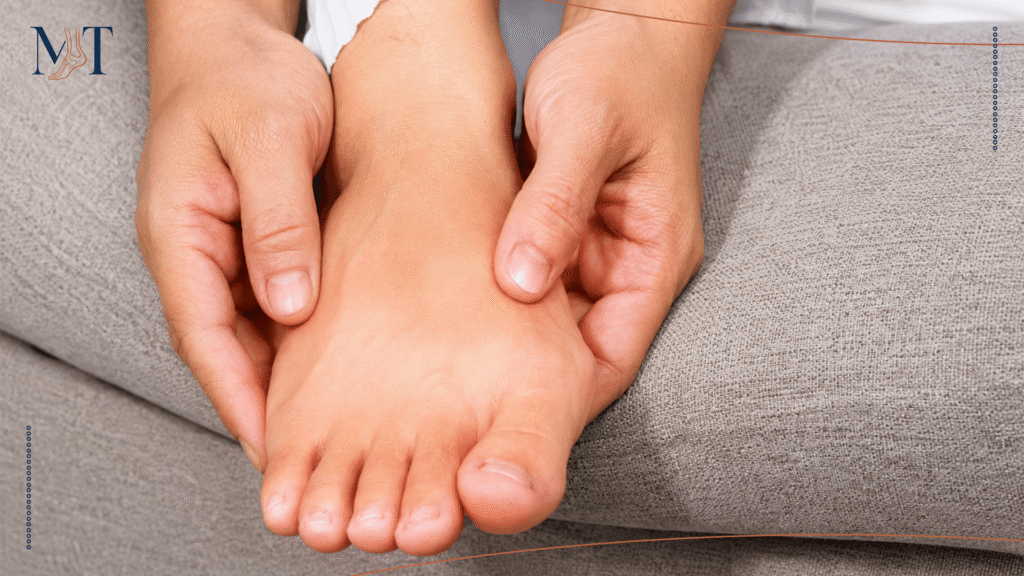
A: No , not every bunion needs surgical correction. The decision depends on the severity of the deformity and how much it affects the patient’s daily life.
In mild to moderate cases, especially when the bunion causes little to no pain, treatment often starts with conservative measures: wearing wider, more comfortable shoes, using orthotic inserts or toe spacers, and avoiding footwear that puts pressure on the joint. These steps won’t reverse the deformity, but they can reduce discomfort and slow its progression.
Surgery becomes the recommended option when:
- Pain persists despite changing footwear or using supportive devices
- The deformity is progressively worsening
- Daily activities like walking or standing become difficult
- The toe misalignment starts affecting the other toes (such as overlapping or crowding)
For patients who do need surgery, techniques like Minimally Invasive Surgery (MIS) now offer a much easier path than traditional open surgery with tiny incisions, less pain, and a significantly faster recovery.
The best approach is always a personalized evaluation. A simple clinical exam and weight-bearing X-ray can determine the exact severity of the case and whether conservative treatment is enough, or whether surgical correction is the right next step.