
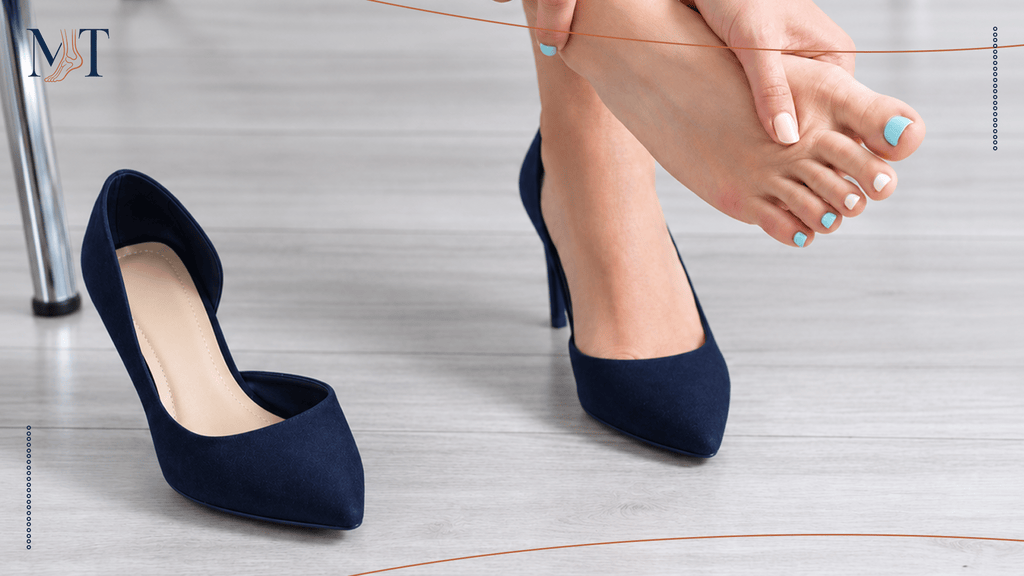
Shoes don’t create bunions out of nowhere but they can absolutely make things worse, faster. If you’re already prone to foot deformity, your footwear choices can either protect your feet or accelerate the problem.
Shoes that squeeze the toes together, especially narrow or pointed toe styles force the big toe into an unnatural position. Over time, repeated pressure like this pushes the joint further out of alignment, speeding up bunion development.
High heels shift a large amount of body weight forward onto the front of the foot, right where the big toe joint sits. Combine that with a narrow toe box, and you get one of the most common footwear combinations linked to worsening bunions.
Beyond the visible bump, tight shoes can also cause:
- Increased friction and irritation over the joint
- Swelling and inflammation
- Calluses or corns from constant rubbing between toes
The good news is that the right footwear can genuinely help protect your feet:
- Wide toe box: Gives your toes room to sit naturally, without being pushed together
- Low or flat heel: Reduces forward pressure on the big toe joint
- Soft, flexible material: Reduces friction over sensitive areas
- Proper arch support: Helps distribute weight more evenly across the foot
Choosing the right shoes isn’t just about avoiding pain in the moment it’s one of the simplest ways to slow down the progression of an existing bunion, or reduce your risk if you’re genetically prone to developing one.