
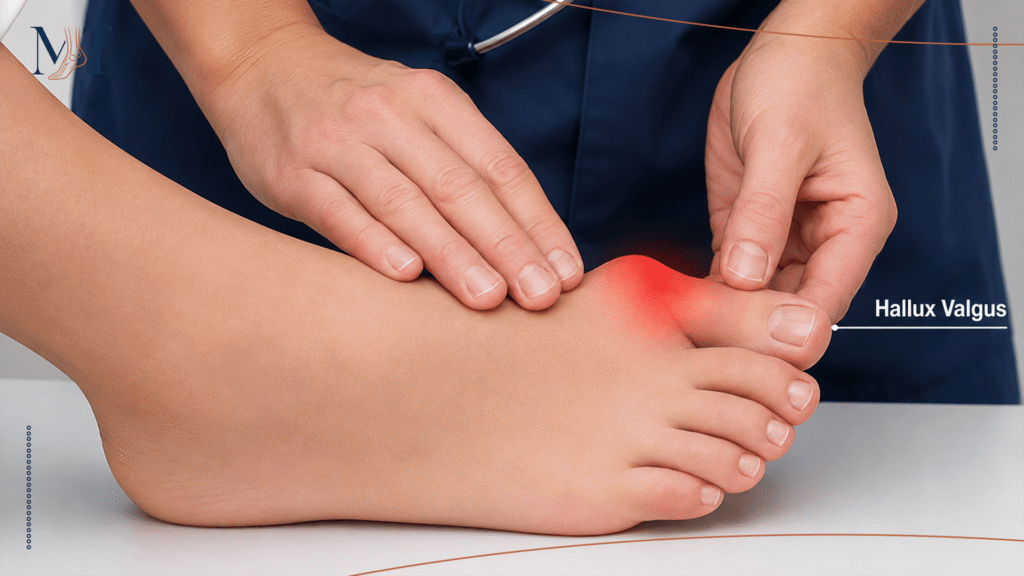
When most people notice a bunion forming, their first thought is usually: “It’s because of my shoes.” And while footwear does play a role, it’s rarely the actual root cause.
It Starts With How Your Foot Is Built
The biggest factor behind foot deformities like bunions is your foot’s natural structure how your bones are aligned, how flexible your joints are, and the way your foot handles weight and pressure with every step. Some people are simply born with a foot shape that puts more strain on the big toe joint over time.
Genetics Play a Bigger Role Than You’d Think
If your mother, father, or siblings have bunions, there’s a good chance you’re more likely to develop one too. Foot shape and joint structure are largely inherited which is why bunions often appear in multiple members of the same family, sometimes even at similar ages.
Footwear: An Accelerator, Not the Root Cause
Tight, narrow, or pointed shoes don’t create a bunion out of nowhere but if your foot is already prone to one, this kind of footwear can speed up the process significantly. Constant pressure on the joint pushes the deformity to progress faster than it naturally would.
Other Contributing Factors
- Joint flexibility (hypermobility): Looser joints are more prone to shifting out of alignment over time
- Flat feet: Can change how weight is distributed across the foot, adding pressure to the big toe joint
- Previous foot injuries: Can alter foot mechanics and contribute to deformity
- Inflammatory conditions: Such as rheumatoid arthritis, which can affect joint stability
A bunion is rarely caused by just one thing; it’s usually a combination of how your foot is built, your genetics, and daily habits like footwear choice. Understanding your specific cause is the first step toward the right treatment plan, whether that’s simple prevention or a more advanced solution.