
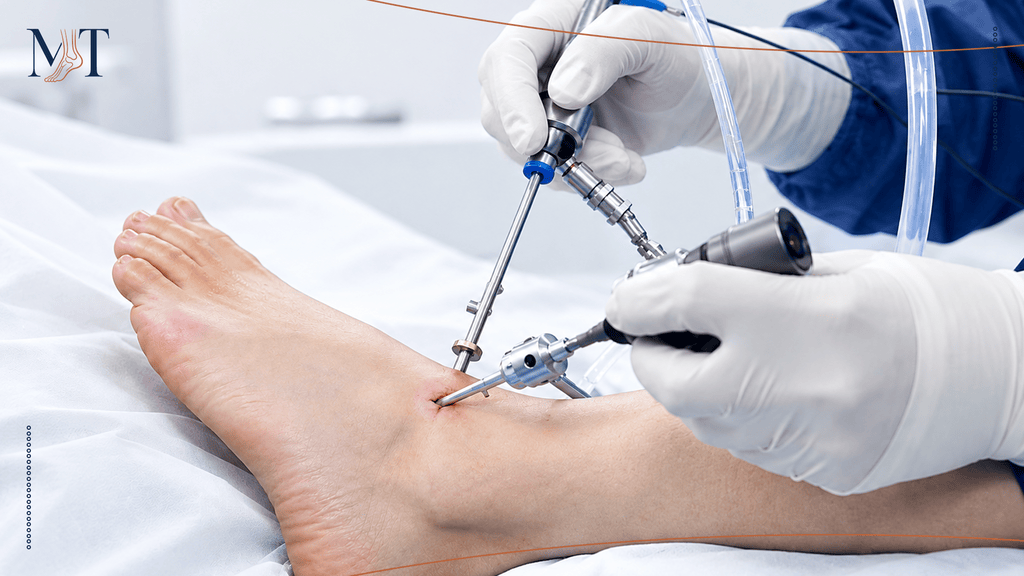
Minimally Invasive Surgery isn’t a passing trend; it reflects a genuine shift in how foot and ankle deformities are treated globally. Here’s why more surgeons are adopting it.
The core appeal of MIS is simple: achieve the same correction, with far less disruption to the body. Smaller incisions mean less soft tissue damage, which naturally translates into less pain, less bleeding, and a smoother recovery for the patient.
Earlier minimally invasive techniques were limited by the tools and imaging available at the time. Today, continuous X-ray guidance (fluoroscopy) combined with specially designed micro-instruments allows surgeons to correct bone position with a level of precision that was much harder to achieve years ago.
Patients today are more informed, and they’re actively looking for options that mean less time off work, less visible scarring, and a faster return to normal life.
This demand has pushed more surgeons to train in and adopt MIS techniques.
This shift mirrors what’s happened across many fields of surgery from laparoscopic procedures to arthroscopy where “less invasive” doesn’t mean “less effective.” It often means achieving the same result with a much easier experience for the patient.
Surgeons are adopting MIS because it genuinely improves the patient experience without compromising the quality of correction, a rare combination that’s hard to ignore.