
One Step Makes All the Difference — Start Today
Of everything involved in treating a bunion, the assessment, the treatment plan, the recovery the hardest step is often simply the first one: booking the evaluation. Why People Delay It’s common to put off addressing a bunion because it doesn’t yet feel “serious enough,” or out of uncertainty about what treatment might involve. But this hesitation often means dealing with a more advanced, harder-to-manage version of the same issue later. What a Single Evaluation Actually Gives You Getting evaluated doesn’t mean committing to surgery. It simply means having the full picture so that whatever you decide next is based on clear information, not uncertainty. Whether your bunion is just starting to bother you, or it’s been a long standing issue you’ve learned to live with, the path forward starts with one simple step: booking that first assessment. Everything after that becomes clearer.
Quick Answers to the 3 Most Common Bunion Questions

Some questions come up again and again from patients considering treatment. Here are quick, clear answers to the three most common ones. 1. “Do I definitely need surgery?” Not necessarily. Many mild to moderate cases can be managed with conservative measures like supportive footwear and orthotic inserts. Surgery becomes the recommended option mainly when pain persists, the deformity is progressing, or daily activities are being affected. 2. “How long will I be out of action?” With modern techniques like MIS, most patients are walking within days, and returning to most daily activities within a few weeks, a significantly shorter timeline than traditional open surgery, which often requires a longer recovery period. 3. “Will it come back after treatment?” With properly planned and executed surgical correction, recurrence is uncommon. Following post operative footwear guidance and attending follow up visits both play an important role in maintaining long-term results. These three questions cover most of what patients are really asking underneath the surface: “Is this serious? How much will it disrupt my life? And will I have to deal with this again?” Getting clear, honest answers early makes the entire decision-making process much less stressful.
Your Patient Journey: From Assessment to Recovery

Understanding what the process actually looks like from your first visit to full recovery can make the entire experience feel far less uncertain. Step 1: Initial Assessment Your journey begins with a clinical examination and weight-bearing X-rays, which allow for an accurate evaluation of the deformity’s severity and the specific structure of your foot. This is also the stage where any questions or concerns are discussed openly. Step 2: Personalized Treatment Planning Based on the assessment, a treatment plan is built specifically around your case whether that means conservative management, or a surgical approach such as MIS. No two treatment plans are exactly the same, because no two feet are exactly the same. Step 3: The Procedure (If Surgery Is Recommended) If surgery is the right path, the procedure itself particularly with MIS is designed to be as minimally disruptive as possible, with small incisions and precise, imageguided correction. Step 4: Early Recovery In the days immediately following surgery, the focus shifts to rest, elevation, and early walking in a protective shoe, the first steps of the healing process. Step 5: Follow-Up and Progress Monitoring Regular follow-up visits track healing progress, address any concerns, and guide the gradual return to normal footwear and activity. Step 6: Full Recovery and Long-Term Care As healing completes over the following weeks and months, the focus moves toward returning to regular activities along with guidance on footwear and habits that support long term results. Why Understanding This Journey Matters? Knowing what to expect at each stage helps reduce anxiety and allows patients to feel more in control of their own care because a well-understood process is always easier to trust.
Bunion in Athletes — Don’t Ignore the Pain
For athletes and active individuals, foot pain is often brushed aside as “just part of training.” But when it comes to a bunion, ignoring early pain can quietly affect performance and get worse the longer it’s left unaddressed. Why Are Athletes Especially Vulnerable? Repetitive impact, quick directional changes, and constant pressure on the forefoot all common in sports can accelerate the progression of an existing bunion faster than in a typical, less active lifestyle. How It Can Affect Performance? Continuing to train intensely while ignoring bunion pain often doesn’t just fail to solve the problem it can accelerate its progression, sometimes leading to a more complex situation than if it had been addressed early. Modern treatment approaches, including Minimally Invasive Surgery (MIS), are specifically well suited for athletes offering faster recovery timelines and less downtime compared to traditional surgery, making a return to sport realistic and well-planned rather than open ended. If foot pain is starting to affect your training or performance, it’s worth addressing early both to protect your current season and your long term foot health.
Don’t Wait — Bunion Gets Worse Over Time
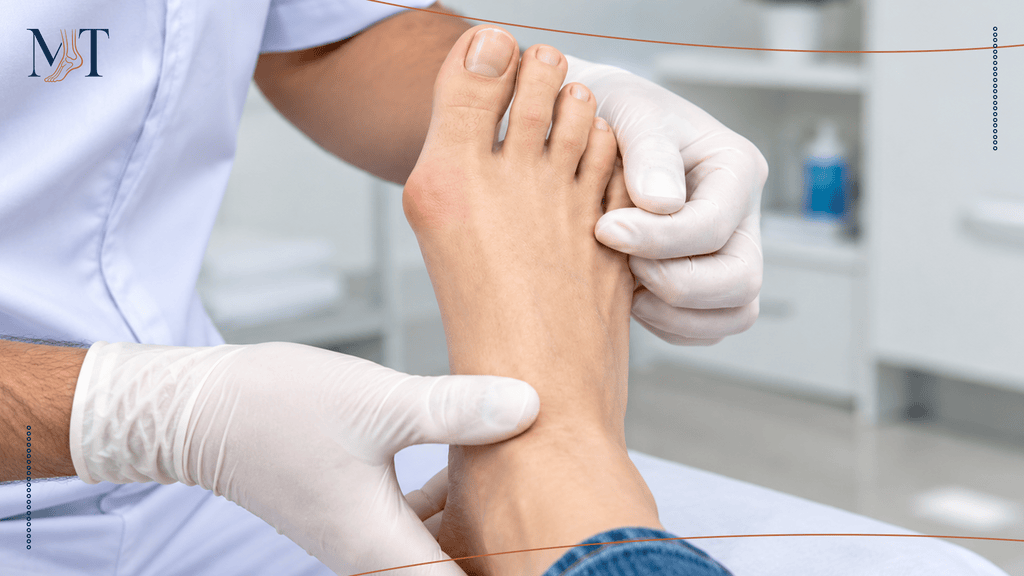
It’s easy to put off dealing with a bunion, especially in the early stages when it’s more of a visual annoyance than a real problem. But waiting often comes with a cost. Hallux Valgus typically doesn’t stay the same; it tends to gradually worsen over months and years. What starts as a small, painless bump can slowly develop into a source of daily discomfort, affecting how you walk and which shoes you can wear comfortably. What “Waiting” Can Lead To Early Evaluation Doesn’t Mean Immediate Surgery Getting your foot assessed early doesn’t automatically mean you’ll need an operation right away. In many cases, early-stage bunions can be managed with simple lifestyle and footwear adjustments options that are far more effective before the deformity progresses further. Waiting doesn’t make a bunion go away it usually just means dealing with a more advanced version of the same problem later on. An early evaluation costs very little time, but can meaningfully expand your treatment options.
3 Tips for a Faster Recovery After Surgery
Surgery is only one part of the journey; how you take care of yourself afterward plays a huge role in how smoothly (and quickly) you recover. Here are 3 simple tips that make a real difference. 1. Rest and Elevate More Than You’d Expect In the first few days after surgery, keeping your foot elevated above heart level whenever possible helps reduce swelling significantly. Less swelling generally means less discomfort, and a smoother start to the healing process. 2. Stick to the Protective Shoe Even When You Feel Fine It’s common to start feeling better within days and be tempted to switch back to regular shoes early. Resist that urge. The protective post-operative shoe is designed to support the correction while the bone heals, skipping it too soon can put unnecessary stress on the area. 3. Don’t Skip Your Follow-Up Appointments Follow-up visits aren’t just a formality; they’re how your surgeon confirms healing is progressing as expected, and catches any small issues early, before they become bigger ones. Even if you feel completely fine, these visits are an essential part of the recovery plan. Recovery isn’t just about what happens in the operating room, it’s a partnership between the surgery itself and how well you follow the guidance afterward. These three simple habits can make the difference between a smooth recovery and unnecessary setbacks.
Royal College Fellowship — England & Switzerland

Behind every skilled surgeon is a foundation of rigorous training and Dr. Mohamed Turky’s includes some of the most respected credentials in international orthopaedic surgery. What Does a Royal College Fellowship Mean? A Fellowship from a Royal College of Surgeons is one of the most rigorous professional qualifications in surgery, awarded after extensive training, examination, and demonstrated surgical competence at the highest international standards. It reflects years of dedicated training well beyond basic medical qualification. Training Across Two Respected Healthcare Systems Dr. Turky’s training and fellowship experience across England and Switzerland reflects exposure to two healthcare systems widely recognized for their rigorous surgical education and high clinical standards. This international training path shaped a surgical foundation built on some of the most demanding professional benchmarks in the field. Why This Matters Beyond the Title A fellowship isn’t just a credential it reflects: Bringing International Standards to Regional Patients This international training foundation directly benefits patients today combining globally recognized surgical standards with focused, hands-on experience treating foot and ankle conditions across the region. Credentials like a Royal College Fellowship represent more than a line on a CV they reflect a long, demanding path of training designed to produce surgeons capable of handling complex cases with precision and confidence. It’s this foundation that continues to shape every patient interaction and surgical decision today.
22+ Years of Orthopedic Excellence
Experience matters especially when it comes to something as precise as foot and ankle surgery. With over 22 years of international orthopedic experience, Dr. Mohamed Turky brings a depth of expertise built across some of the most respected healthcare systems in the world. A Career Spanning Three Countries Dr. Turky’s professional journey includes hospital experience across England, Switzerland, and the UAE three healthcare systems known for high clinical standards and rigorous surgical training. This international exposure has shaped an approach to patient care that draws on diverse surgical philosophies and best practices from each system. A Career Focused on Foot & Ankle Surgery Rather than a general orthopedic practice, Dr. Turky has built deep, focused expertise specifically in foot and ankle surgery, a specialization that allows for a level of precision and familiarity that comes only from years of concentrated experience in one area. Thousands of Procedures, One Consistent Philosophy Across thousands of specialist procedures, one principle has remained constant: every case is unique, and deserves a personalized treatment plan. This philosophy shapes not just the surgical technique chosen, but the entire patient journey from diagnosis through recovery. Why Experience Like This Matters to Patients Years of experience translate into things patients directly benefit from: 22 years isn’t just a number; it represents thousands of patients treated, countless cases refined into better techniques, and a surgical philosophy shaped by some of the highest clinical standards in the world.
Who Is the Ideal Candidate for MIS?
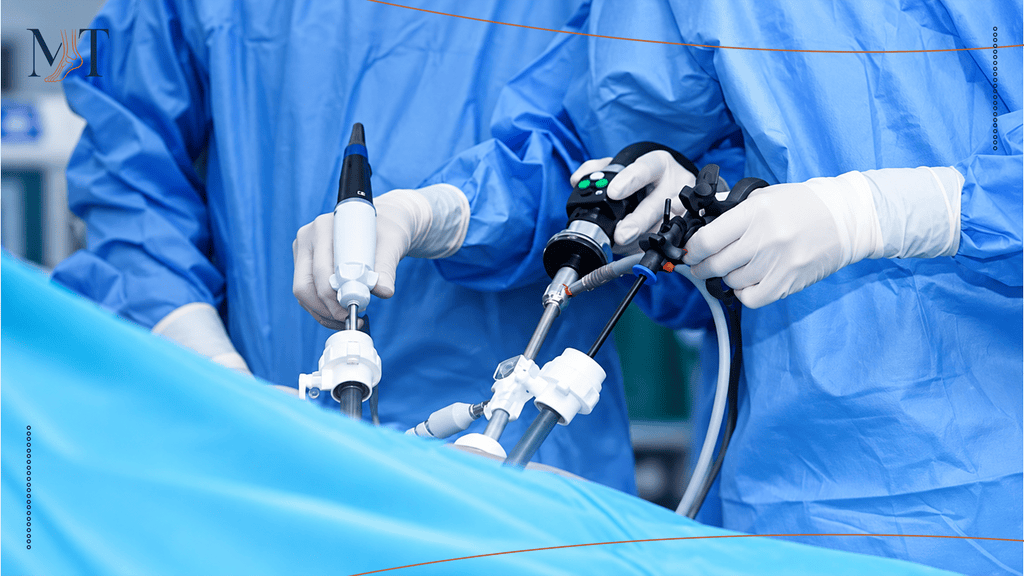
Minimally Invasive Surgery (MIS) has become the preferred approach for the vast majority of bunion cases but understanding who it’s truly suited for helps set the right expectations. Mild to Moderate Deformities: The Most Straightforward Candidates Patients with mild to moderate Hallux Valgus are typically excellent candidates for MIS. In these cases, the correction can usually be achieved fully through the small, targeted incisions that define the technique. More Advanced Cases Can Often Still Qualify Contrary to a common assumption, MIS isn’t limited only to early stage bunions. Many moderately severe, and even some more advanced cases, can still be treated effectively with MIS depending on the specific bone alignment and joint condition. Factors That Guide the Decision When a Different Approach Might Be Considered In select, highly complex cases such as significant joint damage or very advanced deformities a modified or combined surgical approach may be recommended instead, to ensure the best possible outcome. Every foot is different, which is why candidacy for MIS is never assumed; it’s determined through a proper clinical evaluation and imaging assessment. This personalized approach ensures that each patient receives the technique best suited to their specific case, rather than a one size fits all decision.
Ankle Arthroscopy — Precision Diagnosis and Treatment
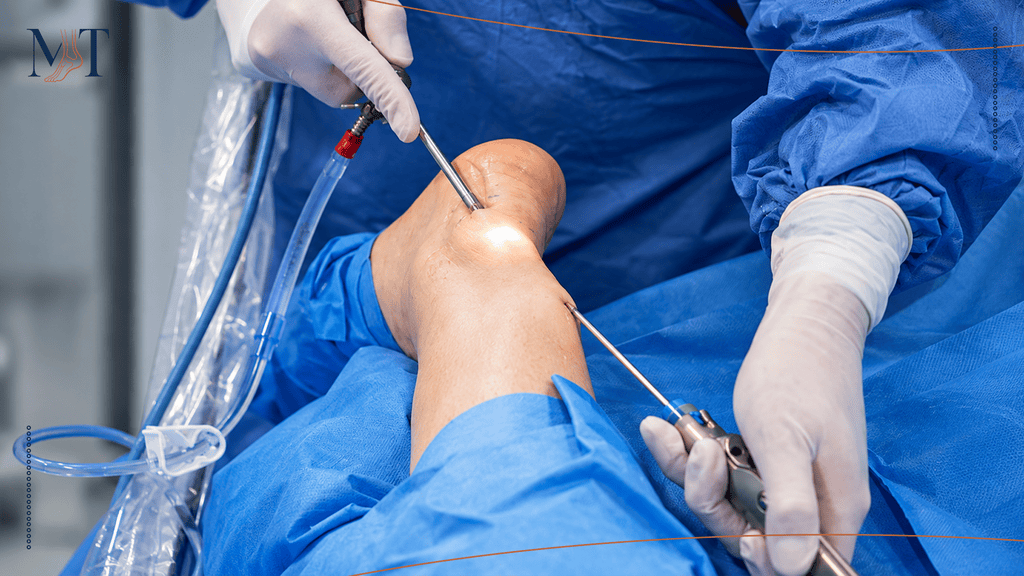
When ankle pain doesn’t go away, and standard treatments haven’t helped, getting an accurate diagnosis becomes the most important step and that’s where ankle arthroscopy plays a key role. What Is Ankle Arthroscopy? Ankle arthroscopy is a minimally invasive technique that uses a tiny camera, called an arthroscope, inserted through a very small incision. This allows a direct, magnified view inside the ankle joint revealing details that X-rays or scans alone sometimes can’t fully capture. Why “Seeing Inside” Matters So Much? Many ankle issues like ligament damage, cartilage injury, or joint impingement can be difficult to diagnose with certainty through imaging alone. Arthroscopy allows direct visual confirmation of what’s actually happening inside the joint, leading to a much more accurate diagnosis. Diagnosis and Treatment, Often in One Session One of the biggest advantages of arthroscopy is that it’s not just diagnostic. In the same procedure, it can often be used to: Who Typically Needs It? Ankle arthroscopy is commonly recommended for patients with: Why This Approach Builds Confidence Because it combines precise diagnosis with same-session treatment, through a minimally invasive approach, ankle arthroscopy allows patients to move from uncertainty to a clear, targeted treatment plan often with a much easier recovery than open ankle surgery.